Overview
Quantum Valhalla is the newest gold EA in the Quantum range by Bogdan Ion Puscasu. Unlike several of its siblings, the vendor explicitly describes it without grid or martingale, with six strategy cores and a stop-loss. That sounds like a more cautious design. So far, it is barely proven: there is a single signal, started one day before the market launch, and the reported growth on that account dates from before then. On top of that come stops the EA manages internally, per the vendor, and a launch price that is meant to rise. Our grade is provisional. Quantum Valhalla is not listed at AlgoTradingSpace (checked 17 Nov 2026).
What the vendor sells
Per the product page (read 17 Nov 2026):
- Strategy: six cores that approach gold differently: breakouts, directional strength (momentum), and reversal and fade strategies that bet on exhausted moves. Add several trading sessions and a filter that picks buy and sell signals by market regime. Several cores can trade at the same time.
- Grid and martingale: neither, per the vendor, also stressed in his launch post of 21 Oct 2026.
- Trade management: the EA is meant to check whether a position develops as expected, spot failed breakouts early, close positions that lose momentum and cap large single losses with an emergency stop. He names a fixed and an adaptive stop-loss. Per the vendor, the EA manages all protective exits internally.
- Market: XAUUSD only.
- Account: per the vendor an ECN, raw or low-spread hedging account, VPS mandatory, minimum deposit $500, $1,000 or more recommended, leverage from 1:100, 1:500 recommended. The product page names no recommended risk per trade (read 17 Nov 2026).
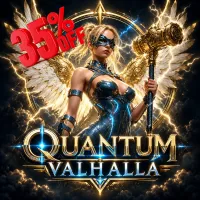
- Price: $399.99 as a launch price with a free demo and ten activations. The product page says “Special launch discount price. Final price $599” (read 17 Nov 2026); it does not say when the final price is to apply. The product image advertises “35% OFF”; measured against the stated final price of $599, the launch price amounts to a discount of roughly one third. Per the vendor, buyers can get another EA as a bonus on request.
- Version: released on 21 Oct 2026 as version 10.1. Per the vendor, the high number counts internal development stages; on the market there has been one update since, on 25 Oct 2026, for time sync around the clock change. Per the vendor, Valhalla builds on Quantum Valkyrie, which is not among his current products on the market.
The manual and settings come only by private message after purchase. The vendor's own disclaimer says: because the stops are managed internally, interruptions of the terminal or VPS and extreme market conditions can lead to losses beyond the expected limits, and several cores can hold gold positions at the same time.
The signal
On the product page the vendor links one public MQL5 signal, “Quantum Valhalla” (2396352), started on 20 Oct 2026, one day before the market launch. The vendor's other signals belong to other Quantum EAs. The signal had no subscribers; copying costs $999 a month (as of 17 Nov 2026).
Real money or demo: per the MQL5 rules only real-money accounts are allowed for signals, demo and cent accounts are deleted, and MQL5 shows the “Real Account” icon on this signal. Which settings, how much risk per trade and which cores run there is unknown. We do not run an account with Valhalla ourselves.
What we read on 17 Nov 2026, without figures, as in all our reviews (methodology):
- Small account: the starting capital is below the minimum deposit the vendor himself names.
- Few trades: only a few dozen trades have closed in total. MQL5 itself shows the notice that the number of deals is too small to judge trading quality and that the account is new.
- Decline: the deepest decline by balance is moderate on our scale. It is not far below the threshold to “significant”, though, and it arose on a short track. The decline by equity is smaller; for us it never counts as a plus, the grade uses the worst figure across balance and equity.
- Leverage and margin use: the account runs at 1:500. Maximum margin use has stayed low so far. In the EU, retail clients may trade gold at no more than 1:20; anyone who wants to mirror the signal's position sizes at that leverage needs considerably more free margin.
- Holding time: positions stay open considerably longer on average than with gold scalpers such as Gold Snap. Going by its history, Valhalla is not a scalper.
- Mostly long: the majority of trades are buys. In a phase of rising gold prices that says little about how the EA trades when gold falls.
When the growth came
For every signal we read the history from the page's chart data, not just the end figure. For Valhalla it gives a clear picture:
- All of the reported growth came before the signal start. On the start day the balance was already above the starting capital. That gain from before 20 Oct 2026, and so also before the market launch, is included in the page's growth figure.
- Since the signal start the account sits below its level on the start day. It rose slightly until early November, then lost noticeably over several days and partly recovered on 17 Nov 2026 in a single day.
- MQL5 warns: most of the growth came on one day; the warning has been set several times in the history. Between 10 and 16 Nov 2026 MQL5 also reported no trading activity; that warning was removed again on 17 Nov 2026.
- Week count versus start date: the signal page shows a run time in weeks and a lifetime in days that are well above the time since the start on 20 Oct 2026. That fits MQL5 counting from the first trade on the account, not from the signal start. Reading only the week count makes the track look longer than it is as a signal.
- Different drawdown figures: the vendor's signal list shows drawdown and activity figures right next to each other, and the decline by equity is smaller than the one by balance. Taking the low activity figure or the equity figure for the drawdown understates it. What counts for us is the worst of maximum and relative drawdown by balance and relative drawdown by equity; here that is the maximum drawdown by balance.
How to read signal metrics, and why we always take the worst figure, is in the guide trading metrics.
Critical assessment
1. Per the vendor, the stop sits inside the EA. “All protective exits are managed internally by the Expert Advisor.” (read 17 Nov 2026), the vendor writes, and his own disclaimer warns that interruptions of the terminal or VPS can then lead to losses beyond the expected limits. A stop that only exists inside the EA does not fire when the EA is not running, for example during a VPS restart or a lost connection while gold jumps. One buyer, on the other hand, writes that every trade is placed with a stop-loss and take-profit. Both can be true at once, for instance a wide emergency stop at the broker and tighter exits inside the EA. It is not established. Anyone running Valhalla should check in their own terminal whether every order carries a stop at the broker. Why a gold EA needs a VPS is covered in VPS for EAs.
2. Several cores mean more simultaneous risk. Per the vendor, six cores can trade in parallel, all in the same instrument. A stop per position limits the single loss, not the sum when several cores sit in the same direction. Then there is the high leverage: the vendor recommends 1:500, and the signal runs at 1:500. In the EU retail clients may trade gold at no more than 1:20; the risk setting then has to fit the available margin, not the signal. How to set the risk per trade is worked through in position sizing and risk per trade.
3. The signal barely proves the EA on sale. The reported growth comes from before the signal start and before the market launch; since the start the account sits below it. Whether the version on sale was already running before 20 Oct 2026, the page does not say. A few weeks and a few dozen trades on a small account say nothing about an edge or about behaviour in a difficult phase. How far backtest and live can drift apart on gold is shown in gold EA backtest vs. live.
4. The price ladder pushes towards buying early. The product page says “Special launch discount price. Final price $599” (read 17 Nov 2026). Buying now to beat the higher price means buying on evidence of a few weeks. The free demo in the strategy tester is the cheaper first step; vendor backtests do not count towards our grade.
5. Reviews. A single review, positive, dated 2 Nov 2026: the buyer knows Quantum Queen and praises the stop-loss and take-profit on every trade and the quick support. A review after a few days says little about the EA's risk, and buyer reviews do not count towards our grade.
Place in the Quantum range
Bogdan Ion Puscasu sells several EAs under the Quantum brand, and we review many of them. Most of the gold siblings use a grid: Quantum Queen was discontinued, its successor Quantum Queen X is per the vendor a grid with no stated stop-loss, and Quantum Athena X combines trend-following with a grid. For Quantum Titan, also on gold, the product page says little about the logic. Outside gold, Quantum Emperor trades GBPUSD and runs in our EA park, and Quantum King is a grid according to our data.
That makes Valhalla the Quantum EA that sets itself apart from the grid most clearly. We do not carry over the siblings' results to it, nor the vendor's longer signals. Anyone already running a Quantum gold EA should know: Valhalla trades the same instrument. Two gold EAs in drawdown at the same time are the same bet twice, see EA portfolio management. How other gold EAs compare is shown in best gold EA 2026.
How the provisional grade is made
We grade Valhalla on the same six criteria as every EA (calculation) and deliberately go below the data formula where it would be too kind:
- Risk control: the starting point is the worst decline across balance and equity, which sits in the moderate band. The largest deduction is for the internally managed stops, whose failure the vendor himself warns about; further deductions for several cores trading at once at high leverage, and because the band rests on only a few weeks of a small account.
- Track record: a public real-money signal counts. We go well below the formula: a single account chosen by the vendor, started the day before the market launch, growth from before then, below its starting level since the start, a small account.
- Transparency: the design is described in categories, but parameters and settings only come after purchase. A deduction also because it remains open whether the stops sit at the broker.
- Price and value: graded at the launch price of 17 Nov 2026. If the price moves to the announced level, we re-grade.
- Usability: neutral mark, we have not tested the installation ourselves.
- Broker independence: one account at a broker chosen by the vendor, a few weeks, a hedging account required. That is no broad evidence.
As with every EA, an AI from a different model family also grades Valhalla blind; where it differs strongly on a criterion, the mean applies until a human has re-checked. For Valhalla that is the case on transparency, price and value, usability and broker independence: the second review was stricter, and the mean of our mark and its mark applies there. We will re-check the grade once the signal has run for several months, another account appears, the price rises or a larger decline occurs.
Who it suits (and who not)
If you want to test it: start with the free demo in the strategy tester over several periods, then a small separate account with low risk per trade, on a VPS. Check in the terminal whether every order carries a stop at the broker. Follow the signal for several months before adding capital, and only use money you can afford to lose.
Not suitable for anyone who needs a proven track record, for buyers who want to decide quickly because of the price ladder, as a second gold EA next to another gold system such as The Gold Reaper or a Quantum sibling, and for anyone who does not run a VPS around the clock.
Conclusion
Quantum Valhalla is the Quantum EA that sets itself apart from grid and martingale most clearly: six cores built on breakout, momentum and fade with a stop-loss per the vendor, at $399.99 as a launch price. Little of that is proven. The only signal has run for a few weeks, its reported growth dates from before the signal start, and since the start the account sits below its starting level. On top of that come internally managed stops, several cores trading at once and high leverage on the signal. Our grade is therefore provisional, and we grade Valhalla with the same formula as every EA. We earn nothing from the EA itself; we link the vendor and MQL5 only as sources, never as partner links. Links marked “Ad” on this page (VPS, ATS-listed alternatives) are partner links. Past results are no guarantee of future ones, and trading leveraged products can lead to the loss of the capital invested.